
Correct laying of ceramic tiles during renovation is not only a guarantee of aesthetics, but also durability and safe operation. One of the most important components that is often overlooked or neglected due to the "uniform" visual is the "groove".
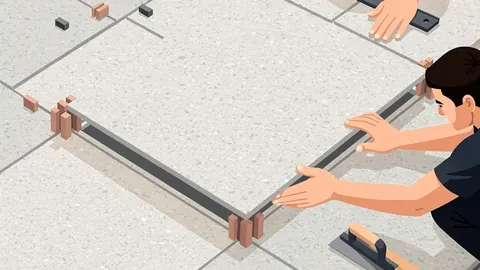
A gap of at least 3 millimeters between tiles plays both a technical and a functional role. Skipping this step is a gross violation of construction physics. Here are 4 main reasons why earnings are mandatory.
1. Natural movement of material (thermal expansion)
According to the laws of physics, all materials react to temperature. As a result of thermal changes, the ceramic tile may expand in summer and contract in winter.
- Risk: In the absence of shoves (as a buffer zone), the expanded slabs exert enormous pressure on each other.
- The result: This stress inevitably causes the tiles to warp, pull ("pop") or crack, ruining your floor.
2. Glue stability and drying
The joints are necessary for the glue-cement to be properly distributed and dry.
- Microelasticity: Shove allows the building structure to perform micro-movements (seating) without transferring these stresses directly to the ceramic.
- Moisture control: especially in damp spaces such as bathrooms and kitchens, the spacers allow the substrate to "breathe", reducing the risk of adhesive damage.
3. Covering manufacturing error (caliber).
Even high-quality tiles have a small error in size, which is called "caliber". No two tiles are identical in millimeters.
- Shove's role: Shove visually "swallows" these small differences. If you lay the tiles without spacing, even a 0.5 mm difference in size will be noticeable and the lines will be crooked.
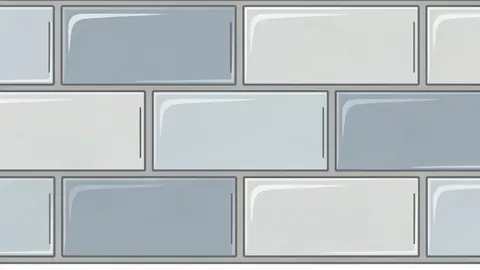
- Aesthetics: Plastering with a tonal fugue to match the tile under the roof emphasizes the interior design and creates a perfect look.
4. Technical service and repair
Accidents happen — you might drop a heavy pot and break a tile.
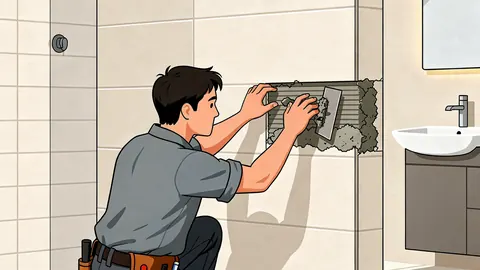
- Repair: If there are cracks, you can carefully remove the grout around the damaged tile and replace only one particular tile.
- No damage: If the tiles are stuck together, trying to remove one broken tile will inevitably break the adjacent healthy tiles due to vibration.
international standards
According to professional laying standards (eg TCNA or European norms), it is mandatory to leave grooves, especially in the case of large format and ceramogranite tiles.
- Rule: 3mm is considered the minimum recommended spacing for standard tiles. For rectified (laser cut) tiles, 2 mm is the minimum safe distance.
Frequently Asked Questions (FAQ)
Can I use 1mm shim for rectified tiles? - This is risky. Although rectified tiles have straight edges, most manufacturers and standards recommend a minimum of 2mm. A 1mm seam leaves almost no room for thermal expansion or grouting.
What happens if I have underfloor heating? - If you have underfloor heating, heat sinks are critically important. The temperature variation is sharper here. You should leave wider joints (at least 3-4 mm) and use elastic glue and elastic grout to compensate for the expansion.
Does the color of the fugue matter? - Yes. For a "unified" look, choose a grout that exactly matches the color of the tile. Choose a different color for a graphic/contrasting visual. For floors, dark putty is more practical because it hides dirt better than white.